Adjunto en esta entrada la modificación de mi unidad Sobre el Renacimiento ya que en su elaboración se me olvidó incluir los criterios de evaluación.
Template to design a
CLIL didactic unit
Subject: Social
Science Teacher: Berta
Title of the Unit: Renaissance Course / Level: 2º ESO
1. Learning outcomes
/
Evaluation
criteria
|
|
|
2. Subject Content
|
- Humanism. Importance of printing in spread
of humanism.
- The religious Reform and its location on
the map.
- Comparison between the various religious
movements (Catholics, Lutherans, Calvinists and Anglicans).
- Listing of the disciplinary action of the
Council of Trent.
- The spread of the Reformation.
- The courtiers and the patrons.
- The art of the Renaissance and its
dissemination in Flandes, Germany and France.
- Observation and analysis of Renaissance’s
works of art.
|
|
3. Language Content
/ Communication
|
||
Vocabulary
|
- Names:
Renaissance, Humanism, printing press, Gutenberg, Luther, Lutheran
reformation, Calvinism, Anglicanism, Council of Trent, Counter Reformation,
dogmas, courtiers, patrons, secular subjects, ideal beauty, perspective,
Quattrocento and Cinquecento…
- Verbs:
to disseminate, inspire, invent, encourage, transmit, propagate, print,
renew, publish, represent, adopt, indoctrinate, sculpt, represent,
disseminate, invent, reform, converge, cover,…
-
Adjectives:
Greco-latin, religious, mythological, fantastic, …
|
|
Structures
|
- Routines:
Have you ever heard about Lutero, Miguel Angel or Brunelleschi?
- Do you
know the meaning of Humanism?
- Can
you describe some picture /sculpture / cathedral…?
- Do you
know something about the Counter- Reformation?...
Contenido: Use of verb To Be, to have and
Comparatives.
-
Description’s verbs, such as: locate, enumerate, describe, compare, ….
Classroom
management:
explanation, description, analysis, exposition, observation, distinguish
between…, recognize, understanding…. For example: explain the main
characteristics of the Lutheranism, the Calvinism,…describe some sculpture,
monument or picture; distinguish between the different religious trends…..
|
|
Discourse type
|
Exposition (definitions and comparative
analysis of different ideas)
Narration ( relies on stories)
Description ( pictures, works of art…)
|
|
Language skills
|
Reading the textbook, reading an Art book, writing some exercises or compositions,
Speaking (oral comprehension and answer some questions about the videos) and
listening some videos about this topic (discussions about the Renaissance’s
art).
|
|
4. Contextual (cultural) element
|
Renaissance was chosen because:
- It starts a new historic stage intermediate
between the middle and the contemporary ages.
- Humanism is a new way of understanding the
world.
- Artists leave the gothic style and they are
enamoured of the ancient world. They look for new models based on classical
and in Greco-roman mythology.
- The word Renaissance was created to
highlight the start of a new era.
- It is interesting for the students, because
it breaks with the Middle age and so it is more attractive for them.
|
|
5. Cognitive
(thinking) processes
|
- understand, compare, analyse, describe, enumerate,
distinguish, read, write, classify,…
|
|
6. (a) Task(s)
|
- Watch
a video about the Renaissance in which the students can recognize the main
characteristics of this new age (discoveries, works art, religious’
doctrines…)
-
Complete some worksheets:
Number
1: Recognize the
main features of Humanist thought and assess the importance of the printing
press in its dissemination.
Number
2: Distinguish
the characteristics of the main reformers’ doctrines: Lutheranism, Calvinism
and Protestantism.
Number
3: Explain the
main concerns of renaissance art and recognize the most important artists and
work arts of the Quattocento and Cinquecento.
|
|
6. (b) Activities
|
Reading the textbook and another texts
related to Humanism and Renaissance.
- Activities:
. True or false activities
. Filling gaps and answer questions with simple
sentences.
. Matching activities.
. Complete a chart.
. Describe a picture,
sculpture…
|
|
7. Methodology
|
||
Organization and
class distribution / timing
|
The
methodology will be active and participatory. In addition, it must facilitate
both individual and group learning.
This
work method will be applied through the establishment of work habits,
including completing activities in the student’s book and additional
photocophies.
|
|
Resources and
materials
|
Presentations:
https://docs.google.com/file/d/0B0097n8BgCUXQWxxeU1DNzAzRWc/edit?pli=1
(presentación arte del Renacimiento)
https://docs.google.com/file/d/0B0097n8BgCUXX0diaFVBelRENUU/edit?pli=1
(apuntes-resumen)
Activities:
http://www.juanjoromero.es/eso/2eso/ejercicios_unidad5_la_epoca_del_gotico.pdf
(ejercicios de repaso)
http://www.juanjoromero.es/eso/4eso/europa_xvi.htm
(ejercicios test autocorrección)
https://www.youtube.com/watch?v=ognfM0jy_wo
(vídeos explicativos gótico)
https://www.youtube.com/watch?v=ognfM0jy_wo
(la catedral gótica)
http://www.slideshare.net/MUZUNKU/renacimiento-y-reforma-7154012
(Renacimiento y Reforma)
http://alfonsopozacienciassociales.wikispaces.com/file/view/Martin%20Luther.doc/496791744/Martin%20Luther.doc (Martin Luther)
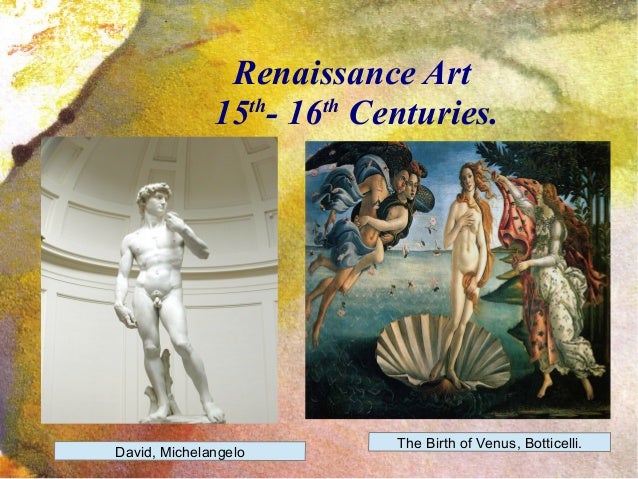
http://image.slidesharecdn.com/renaissanceart-140324130642-phpapp02/95/arte-italia-1-638.jpg?cb=1395684515 (Renaissance Art in Italy)
|
|
8. Evaluation
(criteria and instruments)
|
- To find out if they recognize the
fundamental characteristics of humanist thought.
- To see if they value the importance of the
printing press in the spread of Humanism.
- To confirm that pupils distinguish the
characteristics of the main reformers doctrines: Lutheranism, Calvinism and
Anglicanism.
- To check if they understand the measures
that prompted the Catholic church to halt the expansion of the Protestantism.
- To verify that pupils are be able to
recognize the Quattrocento and Cinquecento’s artists and their most important
works.
- To confirm they can explain the main
“concerns” of renaissance art.
- To check that students establish
differences and similarities between the Italian Renaissance and the art of
this period in other European countries.
|
|
Puedes usar este modelo de plantilla con
total libertad. Gracias por citar la fuente.

No hay comentarios:
Publicar un comentario