lunes, 27 de abril de 2015

DISEÑO DE MATERIALES (RENAISSANCE)
En cuanto a los textos que voy a utilizar en la unidad, son éstos los que voy a utilizar ya que me baso en el libro de texto y en una batería de preguntas cortas que les voy proponiendo a lo largo del tema , además de una serie de ejercicios que sintetizan los contenidos del tema.


Estos tres primeros enlaces los he utilizado para que los alumnos se hagan una idea clara de los contenidos que vamos a tratar en esta unidad. El apoyo visual a la hora de explicar los nuevos conceptos mejora notablemente su  asimilación y también les facilita el estudio.
Estas tres presentaciones son un ejemplo de andamiaje de recepción, ya que se les ofrece a los alumnos la información relevante para la toma de contacto con un nuevo tema y así comprenda mejor los contenidos que se le exponen a posteriori.


Este mapa conceptual también nos ha servido de gran ayuda para resolver y clarificar las dudas que surgían, así como para destacar las diferencias de esta nueva corriente religiosa en contraposición al catolicismo.
- Con los alumnos usamos Popplet o Mindmap porque son herramientas muy sencillas y así cada uno se hace su propio mapa conceptual en función de sus necesidades. Éste es un ejemplo de andamiaje de producción, ya que los alumnos producen algo nuevo a partir del material dado. Hemos realizado mapas conceptuales del Humanismo, la Contrarreforma, el Quattrocento y el Cinquecento.


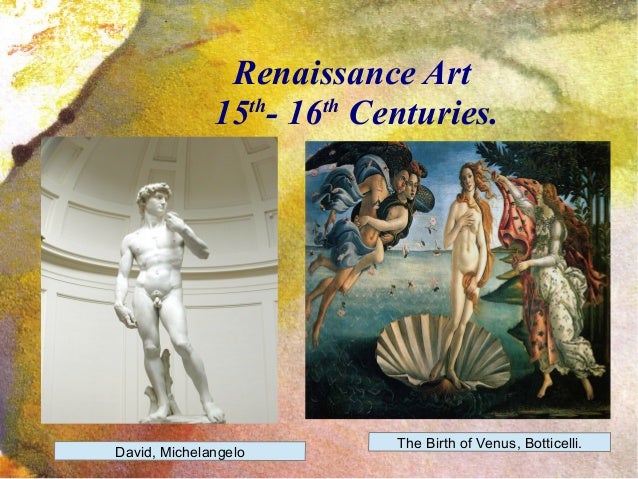
Incluyo esta presentación en Slideshare porque considero que está muy bien explicado el tema del Renacimiento y además hace una comparativa muy clara y diferenciada de las características de este período y las de la época anterior (Edad Media). Por otro lado, incluye también numerosas imágenes del arte de la época y preguntas para orientar el estudio del tema.

Este enlace también resulta de gran ayuda y son un compendio de preguntas cortas con respuestas que los alumnos resuelven de forma interactiva, lo cual hace más atractivo su estudio.

Por último, me parece interesante visualizar este Powerpoint en inglés para asentar los contenidos trabajados previamente y asimilarlos en la L2 con mayor facilidad.

- Como tarea final pueden realizar ejercicios de completar huecos para repasar los conceptos ya adquiridos:
WHAT HAVE I LEARNED
What was the Renaissance?
1. The Renaissance was ___________________________________________________
______________________________________________________________________
2.The Word Renaissance came from_________________________________________

3. It started in _______________ in _____________ and finished in _______________.
4. It is divided into two periods: ________________(                   ) and _______________
(             ).
5. It was inspired by the artistic models of ___________________________________.

-  Basándonos en este ejercicio podemos elaborar otros about What was the Renaissance sculpture, painting and architecture like?

- Otra herramienta interesante para crear líneas del tiempo de manera muy sencilla es Dipity. Se dan a los alumnos las fechas clave y ellos pueden crear la línea del tiempo adjuntando también imágenes , lo cual facilita su aprendizaje.


- Otro ejemplo sería rellenar los huecos de la biografía de Miguel Ángel o de cualquier otro artista importante de la época tras la lectura/audición del texto o proporcionándoles las palabras que faltan.
http://en.educaplay.com/en/editarActividad.php?action=editarActividad&idActividad=1855528

BIOGRAPHY OF MICHELANGELO (1475-1564)

Michelangelo Buonarroti ____ ____ on 6 March ____ in Caprese near Florence
(Italy), where his father was the local __________. A few weeks after his birth, the family moved to Florence. In 1488, Michelangelo was ____________ to the
painter Domenico Ghirlandaio. He then lived in the household of Lorenzo de Medici, the leading patron of the arts in Florence.

After the Medici was __________from Florence, Michelangelo travelled to Bologna and then, in 1496, to Rome. His primary works                                                were sculptured in these early years. His 'Pietà' (1497) made his name and he returned to Florence as an famous sculptor. Here he produced his 'David' (1501-1504)

 In 1505, Pope Julius II called
Michelangelo back to Rome and
______________ him to design Julius’
own ______. Due to an argument
between Julius and Michelangelo,
and the many other demands on
the artist's time, the project was
never completed, although
Michelangelo did produce a sculpture of
Moses for the___________.

                                                   
Michelangelo’s next major ____________ was the ceiling of the Sistine Chapel in the Vatican (1508-1512). From then, Michelangelo was regarded as Italy's greatest living artist. Then, the new pope, Leo X, ______________ Michelangelo to rebuild the ___________ of the church of San Lorenzo in Florence. In 1534, Michelangelo returned to Rome where he was _______________ to paint 'The Last Judgement' on the altar wall of the Sistine ________ (1537-1541). From 1546 he was increasingly active as an architect, in particular on the great church of St Peter's.

Loneliness and ________ were Michelangelo´s companions in the last years of his life. Many of his friends had died. He ________ the Florentine Pietá but, dissatisfied with his work, Michelangelo attacked the sculpture with a __________. He died in Rome on 18 February ______.                                                                                                                      


Actividad interactiva de preguntas con múltiples repuestas


(Tengo que añadir que los mapas conceptuales y las fotografías no he conseguido subirlas al blog, lo he probado de diferentes formas y no he sabido hacerlo)
Template CLIC Unit: RENAISSANCE   2º ESO

Adjunto en esta entrada la modificación de mi unidad Sobre el Renacimiento ya que en su elaboración se me olvidó incluir los criterios de evaluación.


Template to design a CLIL didactic unit

Subject:         Social Science                        Teacher:  Berta

Title of the Unit:        Renaissance                Course / Level:  2º ESO             

1. Learning outcomes
 / Evaluation
 criteria
- To understand the origins, characteristics and evolution of humanist thought.
- To explain the importance of the invention of the printing press (Gutenberg) in the spread of Humanism.
- To understand the causes of the protestant church reform.
- To expose the basic principles of the Lutheran Reformation.
- To recognize a ne artistic style: the Renaissance.
- To discuss and identify artistic works representative of the Quattrocento and the Cinquecento.
- To learn how to use with precision the vocabulary introduced in this topic.
2. Subject Content
- Humanism. Importance of printing in spread of humanism.
- The religious Reform and its location on the map.
- Comparison between the various religious movements (Catholics, Lutherans, Calvinists and Anglicans).
- Listing of the disciplinary action of the Council of Trent.
- The spread of the Reformation.
- The courtiers and the patrons.
- The art of the Renaissance and its dissemination in Flandes, Germany and France.
- Observation and analysis of Renaissance’s works of art.

3. Language Content / Communication
Vocabulary

- Names: Renaissance, Humanism, printing press, Gutenberg, Luther, Lutheran reformation, Calvinism, Anglicanism, Council of Trent, Counter Reformation, dogmas, courtiers, patrons, secular subjects, ideal beauty, perspective, Quattrocento and Cinquecento…
- Verbs: to disseminate, inspire, invent, encourage, transmit, propagate, print, renew, publish, represent, adopt, indoctrinate, sculpt, represent, disseminate, invent, reform, converge, cover,…
- Adjectives: Greco-latin, religious, mythological, fantastic, …
Structures

- Routines: Have you ever heard about Lutero, Miguel Angel or Brunelleschi?
- Do you know the meaning of Humanism?
- Can you describe some picture /sculpture / cathedral…?
- Do you know something about the Counter- Reformation?...
Contenido: Use of verb To Be, to have and Comparatives.
- Description’s verbs, such as: locate, enumerate, describe, compare, ….
Classroom management: explanation, description, analysis, exposition, observation, distinguish between…, recognize, understanding…. For example: explain the main characteristics of the Lutheranism, the Calvinism,…describe some sculpture, monument or picture; distinguish between the different religious trends…..
Discourse type
Exposition (definitions and comparative analysis of different ideas)
Narration ( relies on stories)
Description ( pictures, works of art…)

Language skills
Reading the textbook, reading an Art book,  writing some exercises or compositions, Speaking (oral comprehension and answer some questions about the videos) and listening some videos about this topic (discussions about the Renaissance’s art).
4. Contextual (cultural) element
Renaissance was chosen because:
- It starts a new historic stage intermediate between the middle and the contemporary ages.
- Humanism is a new way of understanding the world.
- Artists leave the gothic style and they are enamoured of the ancient world. They look for new models based on classical and in Greco-roman mythology.
- The word Renaissance was created to highlight the start of a new era.
- It is interesting for the students, because it breaks with the Middle age and so it is more attractive for them.
5. Cognitive (thinking) processes
- understand, compare, analyse, describe, enumerate, distinguish, read, write, classify,…
6. (a) Task(s)
- Watch a video about the Renaissance in which the students can recognize the main characteristics of this new age (discoveries, works art, religious’ doctrines…)
- Complete some worksheets:
Number 1: Recognize the main features of Humanist thought and assess the importance of the printing press in its dissemination.
Number 2: Distinguish the characteristics of the main reformers’ doctrines: Lutheranism, Calvinism and Protestantism.
Number 3: Explain the main concerns of renaissance art and recognize the most important artists and work arts of the Quattocento and Cinquecento.
6. (b) Activities
Reading the textbook and another texts related to Humanism and Renaissance.

- Activities:
. True or false activities
. Filling gaps and answer questions with simple sentences.
. Matching activities.
. Complete a chart.
. Describe a picture, sculpture…

7. Methodology
Organization and class distribution / timing
The methodology will be active and participatory. In addition, it must facilitate both individual and group learning.
This work method will be applied through the establishment of work habits, including completing activities in the student’s book and additional photocophies.
Resources and materials
Presentations:


Activities:
http://www.juanjoromero.es/eso/4eso/europa_xvi.htm (ejercicios test autocorrección)

https://www.youtube.com/watch?v=ognfM0jy_wo (vídeos explicativos gótico)


8. Evaluation (criteria and instruments)
- To find out if they recognize the fundamental characteristics of humanist thought.
- To see if they value the importance of the printing press in the spread of Humanism.
- To confirm that pupils distinguish the characteristics of the main reformers doctrines: Lutheranism, Calvinism and Anglicanism.
- To check if they understand the measures that prompted the Catholic church to halt the expansion of the Protestantism.
- To verify that pupils are be able to recognize the Quattrocento and Cinquecento’s artists and their most important works.
- To confirm they can explain the main “concerns” of renaissance art.
- To check that students establish differences and similarities between the Italian Renaissance and the art of this period in other European countries.


Puedes usar este modelo de plantilla con total libertad. Gracias por citar la fuente.


domingo, 26 de abril de 2015

PROYECTO FINAL: RECURSOS UTILIZADOS Y MATERIALES DISEÑADOS


En esta segunda entrada voy a explicar el porqué he utilizado los recursos y materiales incluidos en mi unidad Renaissance.

Los recurso que he usado son básicamente vídeos realizados con Slideshare, que incluyen explicaciones y resúmenes sobre los diferentes conceptos que quería desarrollar acerca del tema. También es muy útil el uso de mapas conceptuales realizados con la herramientas Popplet (de uso muy sencillo), en los cuales nos basábamos para seguir el transcurso de las clases.Durante el último cuarto de hora de cada clase solíamos visualizar imágenes de arte, vídeos sobre la época del Renacimiento y también realizábamos ejercicios interactivos dividiendo la clase en grupos o parejas para estimularles a la hora de estudiar y facilitarles la consolidación de los nuevos conceptos.

Otra de las actividades que les ha resultado muy estimulantes y en las que han participado activamente ha sido la realización de sus propias presentaciones para presentarlas delante de sus compañeros. Han sido pequeños trabajos de investigación acerca de un personaje famoso de la época o de algún descubrimiento importante. Ésto les ha servido para aprender a aprender y a su vez para seleccionar y gestionar toda la información de la que disponían.

En cuanto a los materiales que he utilizado para el desarrollo de mi unidad, he utilizado alguna que ya conocía (Popplet, Pinterest, vídeos de youtube, Symbaloo, REAs de otros profesores que comparten materiales muy interesantes y otras como Educaplay, con la que he realizado juegos de preguntas con múltiples repuestas y un quiz ara completar con palabras).

Como resumen tras la realización de este curso, me gustaría añadir que me ha parecido muy interesante y que espero en un futuro poder aplicar los conocimientos adquiridos puesto que la metodología AICLE me parece muy enriquecedora tanto para los docentes como para los alumnos y es una manera muy eficaz de trabajar y aprender contenidos e idiomas a la vez. 
también quiero decir, que me gustaría poder seguir formándome en este campo para mejorar mis aptitudes y poder ayudar así a los alumnos en su aprendizaje.

Saludos a todos mis compañer@s de curso y ójala os haya servido tanto como a mí.


Proyecto final: DIARIO DEL CURSO (1ª entrada)


En esta nueva entrada en mi blog personal, se nos pide que expliquemos y compartamos la planificación de nuestra unidad AICLE y también que expliquemos los objetivos de uso de los recursos a utilizar y de los materiales que hemos diseñado para la unidad.

En mi caso concreto, elegí la asignatura de Ciencias Sociales y el tema del Renacimiento, que aunque resulta un tanto denso y complejo, a mí me ha servido de gran ayuda para aprender a planificar una unidad AICLE puesto que era el tema en el cual estábamos trabajando y me resultaba fácil puesto que ya la tenía planificada. Ésta ha sido mi primera experiencia tanto con la metodología AICLE como en la impartición de dicha asignatura, así que seguramente habré cometido bastantes errores en su planificación y obviamente cualquier profes@r más experimentado lo hubiese hecho mejor o de forma diferente.

Sin embargo, para mí ha resultado una grata experiencia el poder empezar a saber cómo funciona este tipo de metodología, de la cual había oído hablar mucho pero no sabía realmente cómo funcionaba y desde mi particular punto de vista creo que es una manera innovadora de enseñar tanto los contenidos de la materia como de la L2; es mucho más creativa y motivadora tanto para el alumnado como para los maestr@s que imparten las diferentes asignaturas.

Para planificar mi unida titulada Renaissance y dirigida a alumnos de 2º ESO he seguido básicamente el libro de texto que tienen los alumnos, adaptando la planificación de dicha unida a la metodología AICLE. En mi caso concreto, no he podido llevarla a cabo en su totalidad y simplemente hemos hecho un pequeño acercamiento a la misma puesto que el grupo-clase no está todavía acostumbrado ni preparado para ello.
El bilingüismo está empezando a implantarse en nuestro centro y únicamente se realiza en la asignatura de Science con los de 1º de Primaria, pero como ya he dicho anteriormente, la metodología AICLE creo que es una de las mejores formas de integrar la L2 en nuestros centros.

Dicho ésto, paso a explicar cómo he planificado mi unidad. El Renacimiento es una etapa que "rompe" con toda la época anterior y para clarificar, asentar y recordar de forma más eficaz los contenidos trabajados he utilizado muchas vídeos explicativos, porque creo que "una imagen vale más que mil palabras"; mapas conceptuales que hemos realizado en la pizarra digital y pequeños trabajos de investigación por parte de los alumnos para que realizasen su posterior exposición oral en el aula.

Tanto para mí como docente como para ellos como alumn@s,  ha resultado una experiencia mucho más gratificante puesto que han sido partícipes de la creación de los contenidos de la unidad y también porque  han tenido que explicar y ponerse en la "piel del docente" para exponer y argumentar sus trabajos (experiencia que a algunos les ha supuesto más esfuerzo del que creían  y que les ha servido para superar su miedo escénico).