RENAISSANCE
Hello everybody!
This is my unit, a CLIL about Renaissance and a its new thought, Humanism.
The unit has been designed for students in 2nd year of ESO and it belongs to Social Science's subject.

.jpg)
I have chosen the theme of Renaissance because it was the unit that we were studying in class at this moment and also because I really like this period of history, specially the part of Renaissance art.
- The main objective of this AICLE unit is to understand the characteristics of the humanist thought and its origins and evolution as well. Another very important points are the invention of the printing press (due to it allowed a fast spread of Humanism); the basic principles of the Lutheran Reformation and knowing how to recognize and identify a new artistic style (Renaissance) and also get to know the artists and their most representative works of this era.
- My personal view is that this is a very interesting lesson considering that it "breaks" with the previous feudal system and so that the pupils can learn about a new way of thinking closer to the human reality.


- The objectives and content that I want to get after the execution and the study of this unit are:
Subject: Social Science Teacher: Berta
Title of the Unit: Renaissance Course / Level: 2º ESO
1. Learning outcomes
/
Evaluation criteria
|
- To understand
the origins, characteristics and evolution of humanist thought.
- To explain the importance of the invention of the
printing press (Gutenberg) in the spread of Humanism.
- To understand the causes of the protestant church
reform.
- To expose the basic principles of the Lutheran
Reformation.
- To recognize a new artistic style: the
Renaissance.
- To discuss and identify artistic works
representative of the Quattrocento and the Cinquecento.
- To learn how to use with precision the vocabulary
introduced in this topic.
|
2. Subject Content
|
- Humanism. Importance of printing in spread
of humanism.
- The religious Reform and its location on
the map.
- Comparison between the various religious
movements (Catholics, Lutherans, Calvinists and Anglicans).
- Listing of the disciplinary action of the
Council of Trent.
- The spread of the Reformation.
- The courtiers and the patrons.
- The art of the Renaissance and its
dissemination in Flandes, Germany and France.
- Observation and analysis of Renaissance’s
works of art.
|
- For the achivements of these goals I have prepared a group of tasks and activities which they'll facilitate students making contact with the new theme as well as its further study and development.
6. (a) Task(s)
|
- Watch a video about the
Renaissance in which the students can recognize the main characteristics of
this new age (discoveries, works art, religious’ doctrines…)
- Complete some worksheets:
Number 1: Recognize the main features of Humanist
thought and assess the importance of the printing press in its dissemination.
Number 2: Distinguish the characteristics
of the main reformers’ doctrines: Lutheranism, Calvinism and Protestantism.
Number 3: Explain the main concerns of
renaissance art and recognize the most important artists and work arts of the
Quattocento and Cinquecento.
|
6. (b) Activities
|
Reading the textbook and another texts
related to Humanism and Renaissance.
- Activities:
. True or false activities
. Filling gaps and answer questions with simple
sentences.
. Matching activities.
. Complete a chart.
. Describe a picture,
sculpture…
|
- In addition, the methodology will be active and participatory in all the lessons given that the group-class is reduced and this allows me an individualized monitoring and evaluation of each learner.
7. Methodology
|
|
Organization and
class distribution / timing
|
The methodology will be active and
participatory. In addition, it must facilitate both individual and group
learning.
This work method will be applied
through the establishment of work habits, including completing activities in
the student’s book and additional photocophies.
|
- To begin to introduce the new topic in my classroom and also to have an overall vision of it, I distribute among the pupils some photocophies of mind maps on the basis of which we will continue the theme proposed in the book. Right after, we watch on the white board a series of explanatory videos that complement the theory explained in class and we also display another videos about the Renaissance to reinforce the previous knowledges and realted the theory with the pictures or images as well.
.jpg)
.jpg)
.jpg)
- And finally I attached some of the resources that we have used during this unit:
- Presentations:
https://docs.google.com/file/d/0B0097n8BgCUXQWxxeU1DNzAzRWc/edit?pli=1
(presentación arte del Renacimiento)
https://docs.google.com/file/d/0B0097n8BgCUXX0diaFVBelRENUU/edit?pli=1
(apuntes-resumen)
- Activities:
http://www.juanjoromero.es/eso/2eso/ejercicios_unidad5_la_epoca_del_gotico.pdf
(ejercicios de repaso)
http://www.juanjoromero.es/eso/4eso/europa_xvi.htm
(ejercicios test autocorrección)
https://www.youtube.com/watch?v=ognfM0jy_wo
(vídeos explicativos gótico)
https://www.youtube.com/watch?v=ognfM0jy_wo
(la catedral gótica)
http://www.slideshare.net/MUZUNKU/renacimiento-y-reforma-7154012
(Renacimiento y Reforma)
http://alfonsopozacienciassociales.wikispaces.com/file/view/Martin%20Luther.doc/496791744/Martin%20Luther.doc (Martin Luther)
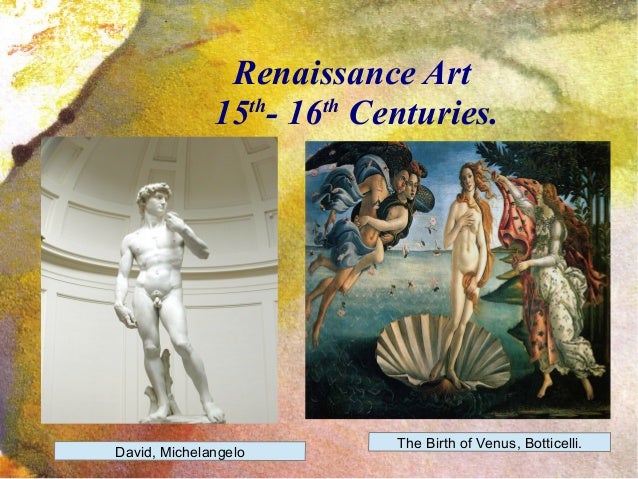
http://image.slidesharecdn.com/renaissanceart-140324130642-phpapp02/95/arte-italia-1-638.jpg?cb=1395684515 (Renaissance Art in Italy)
http://alfonsopozacienciassociales.wikispaces.com/file/view/Gutenberg+Printing+Press.doc (Gutenberg printing)

No hay comentarios:
Publicar un comentario